The photograph captures the entrance to EXPO Tel Aviv on a clear winter day, the kind of light that makes concrete and glass feel optimistic rather than heavy. A wide pedestrian plaza stretches toward the main doors, paved with long rectangular stones that subtly guide the eye forward. Above it all floats the vast steel-and-glass canopy, angled and perforated, casting patterned shadows while framing the blue sky beyond. The building itself is modern and restrained, pale stone walls broken by vertical strips of turquoise glass, with Hall 2 clearly marked, calm and authoritative. Large banners span the entrance, reading “Welcome to IMTM,” flanked by colorful graphic elements that signal tourism, movement, and connection. Smaller flags line the approach, reinforcing a sense of arrival rather than mere entry. People are scattered across the scene—some seated, some walking, some pausing before going in—giving the space a lived-in, professional rhythm without any sense of chaos. It feels organized, intentional, and quietly confident.
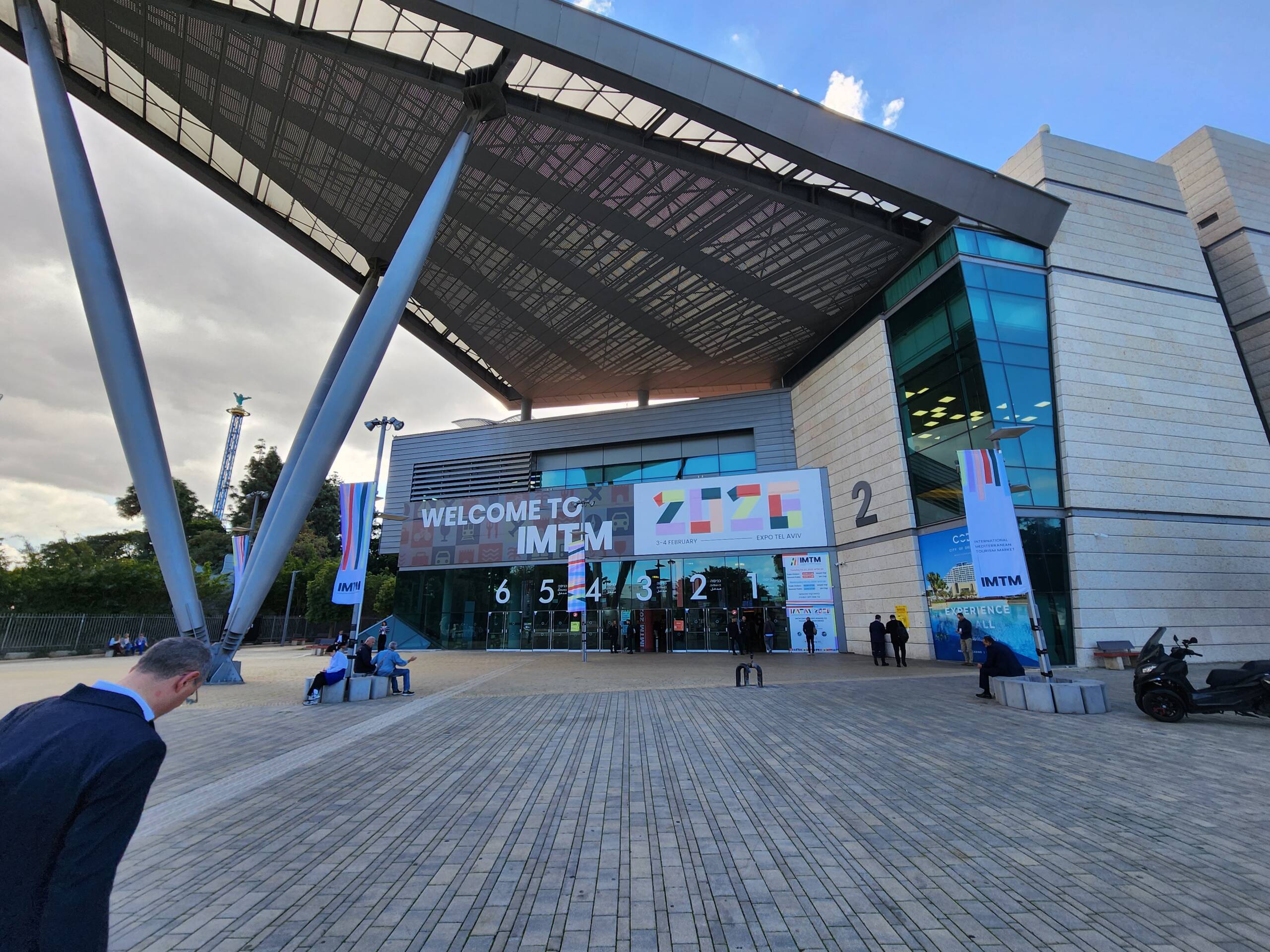
Image Credits: Pho.tography.org
IMTM’s success was rooted in exactly that atmosphere. The event managed to balance scale with focus, bringing together tourism boards, airlines, cruise operators, hospitality groups, and destination marketers in a setting that encouraged real conversations rather than rushed exchanges. Attendance was steady and purposeful, with decision-makers visibly present on the floor, not hidden away. Meetings spilled naturally from booths into corridors and seating areas, and the layout supported both structured appointments and spontaneous encounters. International participation was strong, and the branding throughout the venue created a cohesive identity that made the event feel like a single, shared marketplace rather than a collection of disconnected stands.
What ultimately defined the event as successful was its clarity of intent. IMTM positioned itself not just as a regional fair, but as a Mediterranean crossroads—business-oriented, outward-looking, and practical. Exhibitors reported meaningful leads rather than superficial exposure, while visitors encountered concrete offers, partnerships, and routes to market. The venue, the visual language, and the pacing all reinforced that sense of purpose. Looking back, IMTM stands as a reminder that trade events work best when architecture, organization, and audience alignment quietly do their job, letting the industry itself take center stage.
Related
- Bedouin Hospitality at IMTM 2026, Tel Aviv, Israel
- How Risky Is Visiting Georgia Right Now?
- Destination First: How Places Market Themselves Before Selling Anything Else
- Selling the Sea on Solid Ground: Cruise Marketing at Travel Trade Shows
- Does Showing Up Still Matter? The Real Payoff of Travel Trade Shows
- Top 50 Cruise Ships Around the World for 2026 Revealed by Travel and Tour World
- IMTM 2026, February 3–4, Expo Tel Aviv
- Business Travel Quietly Reasserts Itself in Q4 2025
- Shiso City, Hyogo Prefecture, Japan: Japan’s Quiet Forest Kingdom for Slow and Sustainable Travel
- Elon Musk and Ryanair: When a Tweet Shakes the Budget Airline World
Leave a Reply